
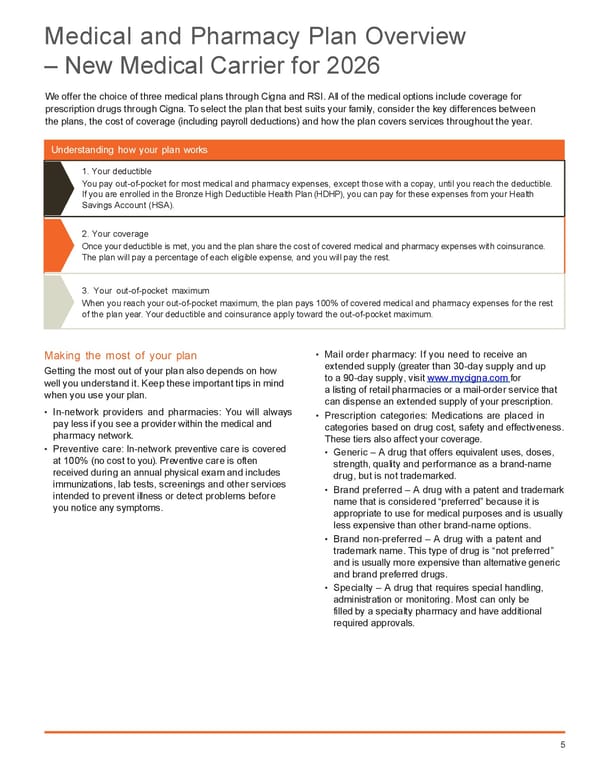
5 Medical and Pharmacy Plan Overview – New Medical Carrier for 2026 We offer the choice of three medical plans through Cigna and RSI . All of the medical options include coverage for prescription drugs through Cigna . To select the plan that best suits your family, consider the key differences between the plans, the cost of coverage (including payroll deductions) and how the plan covers services throughout the year. Understanding how your plan works 1. Your deductible You pay out - of - pocket for most medical and pharmacy expenses, except those with a copay, until you reach the deductible. If you are enrolled in the Bronze High Deductible Health Plan (HDHP), you can pay for these expenses from your Health Savings Account (HSA). 2. Your coverage Once your deductible is met, you and the plan share the cost of covered medical and pharmacy expenses with coinsurance. The plan will pay a percentage of each eligible expense, and you will pay the rest. 3. Your out - of - pocket maximum When you reach your out - of - pocket maximum, the plan pays 100% of covered medical and pharmacy expenses for the rest of the plan year. Your deductible and coinsurance apply toward the out - of - pocket maximum. Making the most of your plan Getting the most out of your plan also depends on how well you understand it. Keep these important tips in mind when you use your plan. • In - network providers and pharmacies: You will always pay less if you see a provider within the medical and pharmacy network. • Preventive care: In - network preventive care is covered at 100% (no cost to you). Preventive care is often received during an annual physical exam and includes immunizations, lab tests, screenings and other services intended to prevent illness or detect problems before you notice any symptoms. • Mail order pharmacy: If you need to receive an extended supply (greater than 30 - day supply and up to a 90 - day supply, visit www.mycigna.com for a listing of retail pharmacies or a mail - order service that can dispense an extended supply of your prescription. • Prescription categories: Medications are placed in categories based on drug cost, safety and effectiveness. These tiers also affect your coverage. • Generic – A drug that offers equivalent uses, doses, strength, quality and performance as a brand - name drug, but is not trademarked. • Brand preferred – A drug with a patent and trademark name that is considered “preferred” because it is appropriate to use for medical purposes and is usually less expensive than other brand - name options. • Brand non - preferred – A drug with a patent and trademark name. This type of drug is “not preferred” and is usually more expensive than alternative generic and brand preferred drugs. • Specialty – A drug that requires special handling, administration or monitoring. Most can only be filled by a specialty pharmacy and have additional required approvals.
 AESOP Benefits Guide 2026 Page 4 Page 6